
Flood Insurance on Long Island
Long Island sits between the Atlantic Ocean and Long Island Sound — two massive bodies of water that make flooding the single greatest natural disaster risk for homeowners here. Your standard home insurance policy does not cover flood damage. You need a separate flood policy, and K&N Insurance Brokerage can compare NFIP and private flood options to find the best rate and coverage for your property.
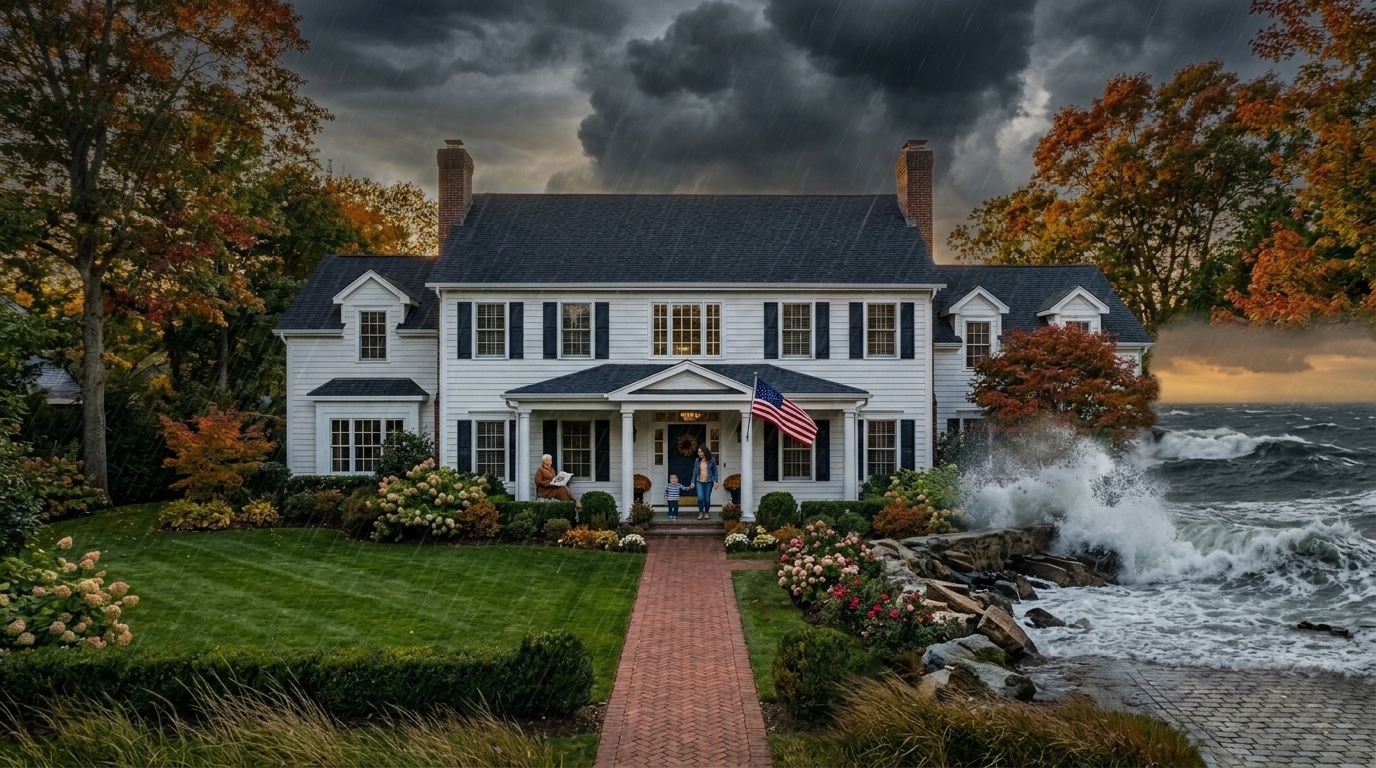
Why Long Island Needs Flood Insurance
Long Island is a 118-mile-long barrier island bordered by water on every side. The South Shore faces the open Atlantic through a chain of barrier islands and bays. The North Shore sits along Long Island Sound with dozens of harbors and inlets. And the interior — often considered “safe” from flooding — saw catastrophic storm surge and rainwater flooding during Hurricane Sandy in 2012.
According to FEMA, tens of thousands of Long Island properties sit in high-risk flood zones. But Sandy proved that flooding does not respect zone boundaries — homes miles from the coast were inundated by storm surge that traveled up creeks, canals, and sewer systems. Between 2012 and 2024, Long Island has experienced multiple major flood events from tropical storms, nor’easters, and even routine heavy rain that overwhelms aging drainage infrastructure.
As Nour Fahmy, founder of K&N Insurance Brokerage, explains: “After Sandy, flood awareness on Long Island changed overnight. I had clients in Huntington who never thought about flood insurance — their homes were nowhere near the beach. Then they had four feet of water in their basements from storm surge that came up Huntington Harbor and through the creek system. Now they all carry flood insurance. The clients who didn’t? Some of them lost everything. FEMA disaster aid averaged about $8,000 per household. Their actual losses were $80,000-$200,000.”
FEMA Flood Zones Explained
FEMA categorizes flood risk by zone. Your zone determines whether flood insurance is required by your lender and heavily influences your premium. You can check your property’s flood zone at FEMA’s Flood Map Service Center.
Zone A (High Risk)
Properties in Zone A have a 1% or greater annual chance of flooding — often called the “100-year floodplain,” though that term is misleading (a 1% annual chance means a 26% chance of flooding over a 30-year mortgage). Zone A includes areas along rivers, creeks, bays, and low-lying coastal terrain. If you have a federally backed mortgage on a Zone A property, flood insurance is required by law.
On Long Island, Zone A encompasses large swaths of the South Shore — from Long Beach and Atlantic Beach through Freeport, Merrick, Bellmore, Massapequa, Babylon, Lindenhurst, and into the Great South Bay communities.
Zone V (Coastal High Risk)
Zone V carries the same 1% annual flood risk as Zone A, plus the additional hazard of storm-driven wave action. These are beachfront and barrier island properties directly exposed to ocean waves during storms. Zone V properties face the highest flood insurance premiums and the strictest building requirements. On Long Island, Zone V runs along the barrier beaches — Long Beach, Lido Beach, Point Lookout, Jones Beach Island, Fire Island, and the Hamptons oceanfront.
Zone X (Moderate to Low Risk)
Zone X properties are outside the high-risk flood zone. Lenders do not require flood insurance here — but that does not mean flooding will not happen. FEMA data shows that more than 25% of all flood claims come from properties in moderate-to-low risk zones. Hurricane Sandy proved this on Long Island — thousands of Zone X homes flooded. Flood insurance in Zone X is significantly cheaper, often $300-$500/year through the NFIP’s Preferred Risk Policy.
NFIP vs. Private Flood Insurance
You have two options for flood insurance: the federal National Flood Insurance Program (NFIP) administered by FEMA, or a private flood insurance carrier. Each has distinct advantages.
| Feature | NFIP (Federal) | Private Flood Insurance |
|---|---|---|
| Maximum dwelling coverage | $250,000 | $1 million+ available |
| Maximum contents coverage | $100,000 | $500,000+ available |
| Loss of use coverage | Not included | Often included |
| Replacement cost for contents | Available with conditions | Standard on most policies |
| Typical cost (high-risk zone) | $700-$1,500/year | $500-$2,000/year (varies widely) |
| Waiting period | 30 days | Typically 10-30 days |
| Availability | Any property in participating community | Depends on carrier appetite for your zone |
| Rate changes | Risk Rating 2.0 (rates rising for many) | Market-driven, can shop annually |
The NFIP advantage: Guaranteed availability and stable claims payment backed by the federal government. You cannot be denied coverage regardless of your flood history or zone. This matters for high-risk properties that private carriers may decline.
The private flood advantage: Higher coverage limits, additional coverages (loss of use, pool repair, landscaping), replacement cost on contents, and potentially lower premiums — especially for newer, elevated homes. Private carriers use property-specific elevation data rather than broad zone maps, so well-elevated homes in high-risk zones often pay less with private flood insurance than NFIP.
As an independent broker, K&N Insurance Brokerage compares both NFIP and private flood options for your specific property. Many of our Long Island clients save 20-40% by switching from NFIP to private flood — while actually getting more coverage.
Long Island Flood Risk by Area
South Shore — Highest Risk
The South Shore barrier island chain and bay communities face the greatest flood exposure on Long Island. Storm surge from the Atlantic pushes through inlets and floods the Great South Bay communities from the south, while heavy rain floods them from the north as runoff overwhelms drainage.
- Long Beach / Lido Beach / Point Lookout: Barrier island communities with Zone V exposure on the ocean side and Zone A on the bay side. Sandy devastated Long Beach — some areas had 4-6 feet of water. Flood insurance is mandatory for virtually every mortgaged property here.
- Freeport / Merrick / Bellmore: Canal communities along the South Shore where tidal flooding is a regular occurrence even without storms. Many homes are in Zone A with NFIP rates of $800-$1,500/year.
- Massapequa / Babylon / Lindenhurst: Great South Bay communities with extensive flood zone coverage. Babylon Village and Lindenhurst experienced severe Sandy flooding. These towns have invested in drainage improvements but remain high-risk.
North Shore — Harbor and Creek Flooding
The North Shore faces a different flood profile — Long Island Sound storm surge funnels into narrow harbors and creek valleys, creating localized but intense flooding.
- Huntington Harbor / Halesite / Centerport: These harbor communities flood when strong north winds push Long Island Sound water into the harbors. Sandy sent unprecedented surge up Huntington Harbor. Our Huntington office works with dozens of homeowners in these flood-prone areas.
- Port Washington / Manhasset / Great Neck: Harbors and low-lying waterfront areas face similar Sound surge risk. Many of these homes are high-value properties that exceed NFIP’s $250,000 dwelling limit and need private flood insurance for adequate coverage.
- Glen Cove / Oyster Bay / Cold Spring Harbor: North Shore Gold Coast communities with harbor flooding risk. Zone A designations are common along the waterfront.
Interior — Flash Flood and Drainage Risk
Even inland Long Island properties flood. Heavy rain events overwhelm storm drains and cause street and basement flooding across central Nassau and Suffolk counties. The August 2014 and September 2023 rain events proved that interior flooding is a real and growing risk. Zone X properties here qualify for the NFIP Preferred Risk Policy at $300-$500/year — affordable protection against a risk most homeowners ignore until it happens.
What You Need to Know Before Buying
The 30-Day Waiting Period
Both NFIP and most private flood policies have a 30-day waiting period from the date of purchase before coverage takes effect. You cannot buy flood insurance when a storm is approaching and expect it to cover that storm. The only exceptions are when flood insurance is required for a new mortgage closing (coverage is effective at closing) or when you increase coverage due to a map change.
This means the time to buy flood insurance is now — before hurricane season, before the next nor’easter, before the next heavy rain event. Waiting until a storm is forecast means waiting 30 days after the storm passes.
NFIP Coverage Limits
The NFIP caps coverage at $250,000 for the dwelling structure and $100,000 for contents. If your Long Island home would cost more than $250,000 to rebuild — and most would — you need either a private flood policy with higher limits or an NFIP policy supplemented by private excess flood coverage.
Risk Rating 2.0 — NFIP Rate Changes
FEMA’s Risk Rating 2.0, implemented in 2021-2023, fundamentally changed how NFIP premiums are calculated. Instead of relying solely on flood zone maps, Risk Rating 2.0 uses property-specific data — distance to water, flood frequency, building elevation, replacement cost, and flood type (river, coastal, rain). Some Long Island homeowners saw premiums decrease under Risk Rating 2.0. Others — particularly those with high-value, low-elevation homes near the coast — saw significant increases. This is another reason to compare NFIP with private flood: the math has changed, and private carriers may now be cheaper for your specific property.
Elevation Certificates
An elevation certificate documents your home’s elevation relative to the Base Flood Elevation (BFE) in your zone. Homes built above the BFE pay significantly less for flood insurance — both NFIP and private. If you do not have an elevation certificate, a licensed surveyor can produce one for $300-$600. For many Long Island homeowners, the one-time cost of an elevation certificate saves thousands in annual premiums.
Frequently Asked Questions — Flood Insurance Long Island
Do I need flood insurance if I am not in a flood zone?
You are not required to carry it, but it is strongly recommended. Over 25% of all flood claims are filed by properties outside high-risk zones. On Long Island, flash flooding from heavy rain, clogged storm drains, and rising groundwater can affect any property. NFIP Preferred Risk Policies for low-risk zones cost $300-$500/year.
Does homeowners insurance cover any flood damage?
No. Standard homeowners policies explicitly exclude flood damage. Water from a burst pipe inside your home is covered. Water that enters your home from outside — storm surge, rising water, rain runoff, overflowing creeks — is flood damage and requires a separate flood policy. This is true for every homeowners policy from every carrier. Learn more about what home insurance covers and what it does not.
How long does it take to get flood insurance?
You can bind a flood policy the same day you request it. However, coverage does not take effect for 30 days under the NFIP (with limited exceptions). Some private flood carriers have 10-14 day waiting periods. Plan ahead — do not wait until a storm is approaching.
Can I get flood insurance for my co-op or condo?
Yes. The NFIP offers policies for condo and co-op unit owners that cover your personal property and improvements (up to $100,000) and the interior of your unit. Your building’s master policy should cover the structure itself. Check with your co-op board or condo association to confirm they carry building-level flood insurance.
What if my home was damaged by Sandy — can I still get flood insurance?
Yes. The NFIP cannot deny coverage based on prior claims. Your premium will reflect your property’s current risk profile under Risk Rating 2.0, but you cannot be refused coverage. Private flood carriers may also cover previously flooded properties, though premiums will be higher. An independent broker like K&N can shop both NFIP and private markets to find the best option for your situation.
How much does flood insurance cost on Long Island?
Costs vary dramatically by zone, elevation, and home value. Typical ranges: Zone X (low risk): $300-$500/year. Zone A (high risk): $700-$1,500/year for NFIP; private may be less for elevated homes. Zone V (coastal high risk): $1,500-$4,000+/year. An elevation certificate and comparison shopping between NFIP and private carriers can significantly reduce your premium. Call us for a specific quote on your property.
Related Coverage from K&N Insurance Brokerage
- Home Insurance — your base homeowners policy (does not include flood)
- Home Insurance in Huntington, NY — Huntington-specific home coverage
- Insurance Broker in Huntington — our Long Island office serves all of Nassau and Suffolk
- Car Insurance — comprehensive auto coverage includes flood damage to vehicles
Don’t wait for the next storm — protect your home now
We compare NFIP and private flood insurance for your specific property. Free quotes, no obligation. 850+ five-star reviews. Hablamos español.
Two Offices Serving Long Island and Queens
Huntington Office
1730 E Jericho Tpke, Huntington, NY 11743
(631) 646-9090
Mon-Fri 9-5, Sat 10-5
Queens Office
182-03 Jamaica Ave, Hollis, NY 11423
(718) 739-9090
Mon-Fri 9-5, Sat 10-5
Flood zone data from FEMA. NFIP program details from FloodSmart.gov. NY regulatory information from NY Department of Financial Services. Rates are estimates — contact us for a quote specific to your property.